Custom wedding stationery - made just for you. No matter what the event, my designs are perfect to make the right lasting impression on your friends and family! Most wedding designs are available as a full ensemble, if there if anything else you would like to see - please let me know. I am pleased to accept your custom requests.
Showing posts with label wedding budget. Show all posts
Saturday, July 12, 2014
How To Hire a Wedding DJ That Is Right For You
Out of all the wedding vendors couples book, the most challenging and arguably most important one is the DJ. You can judge a venue by its visual aesthetics or a photographer by their images, but what criteria can you use to find the best DJ for you? Here’s how to qualify a DJ, who fits both your needs and has the ability to execute your vision:
1. Mixing – Blending songs consistently and tastefully together while transitioning between different eras and genres of music. It requires technical skill, deep-music knowledge, and the intangible ability to read a crowd.
Why – This is the most important factor for keeping your family and friends on the dance floor all night long. It will be the difference between guests forgetting your wedding or having lifelong memories they’ll talk about forever.
How – Does the DJ have a mix that you can listen to? Can you see them perform live at an event? If yes, your ear will be able to distinguish their skill level and tell you if they’re the right fit. If the answer is no, take them off of the list.
2. Service/Organization – Ensuring that every need of a couple is met in a timely fashion and accounting for every detail ahead of time.
Why – The level of service is a barometer of how invested a DJ is to your event and should make that planning process as easy as possible. Organization ultimately leads to either a botched or well-executed event.
How – What is your online interaction like? Does the DJ understand your vision and communicate swiftly or is it like pulling teeth? An in-person meeting will give you a a chance to assess this and ask the DJ how they prepare for an event.
3. Hosting/MCing – Guiding an audience through an event with down-to-earth announcements. Creating a natural flow keeps things moving so people are always engaged.
Why – Family and friends invested their time and money to experience and witness every aspect of your wedding. The last thing you want is some guy blabbing on the mic and annoying everyone.
How – Again, an in-person meeting immediately reveals their verbal communication and listening skills. Or you can always see them perform live at an event.
4. Equipment – Having professional microphones, sound system, lighting, and gear.
Why – The most common problem is microphone feedback, which can ruin a ceremony or heartfelt speech. It doesn’t matter how incredible a mix is if it’s distorted or hits a volume ceiling.
How – Simply ask for a list of equipment then cross reference it online. The cost of the equipment typically correlates with its reliability and performance – the higher the better. If a DJ uses Technics 1200 turntables or Pioneer CDJ 1000s, that’s a sign they are serious about their mixing. If lighting is a priority then find out what options they have available.
5. Experience – The repetition of doing a variety of events.
Why – A DJ who is well versed in both the pressure of party rocking at a club and the detail required for weddings should be well equipped to make sure you have the time of your life.
How – Find out their gig history and actually verify its accuracy.
After you have done the research and interviews, take a step back and consider what’s most important to you. Set aside any preconceived ideas about price because investing in the DJ will ensure that all of the hard-earned money you’re spending in other departments doesn’t go to waste. A wedding only happens once and you should hire the right person that can create the unforgettable experience you’ve always dreamed of.
Tuesday, June 17, 2014
Victorian Frame in Gold Wedding Invitation
This beautiful and elegant design, called Victorian Frame in Gold Wedding, has a light taupe background with a darker taupe border with a circle border that reminds you of the Victorian era. In the center is an ivory inset for your text. This set has invitations, save the date cards, response cards, thank you cards, table number tent cards, envelope seals, wine labels, binders, and return address labels available. Use the envelope seal stickers for any of your DIY gifts - these are available in both large and small sizes! For matching items in this set **CLICK HERE**.
Here is this week's wedding tip!
The Back:
Here is this week's wedding tip!
Saturday, April 5, 2014
30 Unexpected Wedding Costs Brides Forget to Budget For
To help you out, I checked in with wedding vendors and financial
experts across the country to uncover the top items that couples forget
to think about when allocating their wedding finances.
For many brides, asking their nearest and dearest to stand up with them on their wedding day simply isn’t something that can be done via phone or text — or even just on your regular girls’ night out. Brides are popping the question to their ‘maids with creative gifts, personalized cards, or taking them out to a nice lunch or dinner. But remember that those little costs can add up!
Beauty Treatments
You've already set aside money for your professional hair styling and makeup application on the wedding day — but remember that you may need more than one trial for each in order to feel fully comfortable on the big day. Also, keep in mind any pre-wedding beauty treatments you may want to indulge in, from a mani/pedi to a spray tan to a massage. “If there's a more expensive service you are dying to try, look for deals via daily deal sites like Groupon,” said Andrea Woroch, a consumer money-saving expert frequently featured on Today, Good Morning America, The Dr. Oz Show, and more.

Your Bachelorette Party
Bachelorette parties today are bigger than ever; more and more groups are planning weekend getaways, like a Vegas excursion or a girls' beach trip. And even though the maid of honor and bridesmaids are supposed to pick up the tab for the party, many brides end up paying for their own airfare or part of the hotel bill to help alleviate costs for their girls — especially if the bride-to-be is the one pushing for an overnight excursion. Stay close to home to avoid extra travel costs. You will have fun with your girls no matter where you go. Choose a luxe hotel or find a big house to rent near your home, and plan activities to keep the fun going.
Marriage License
Don’t forget to make it legal! Your marriage license will typically cost between $20 and $100, depending on where you're getting married. And in most states, you won't automatically receive a copy of your marriage license after it's been filed — you'll need to pay for that, too.
If you’re having a destination wedding, keep in mind that you may need to fly in a few days before the wedding or even make a second trip to the locale in order to get your marriage license, depending on the waiting period, according to Abra Millar of Hopkins Bay Resort in Belize. This means incurring extra travel fees — more nights, more meals, and possibly a second round of airfare.
Don’t blow your entire stationery budget on your save-the-dates and invitations — you also need to think about programs, escort cards, place cards, menu cards, and any other day-of needs you may encounter. I suggest adding a separate line item in the budget for day of stationery so brides can budget accordingly.
Postage
When choosing your invitations, be sure to weigh it carefully — if it’s more than one ounce, you’re going to need additional postage. Some invitations can set you back $1 or more in postage fees. Keep in mind that extra postage is also required for square invitations, regardless of weight.
Also, don’t forget that you also need stamps for your save-the-dates, RSVP cards, and thank-you notes.
If you and your bridesmaids are planning on getting ready in a hotel suite, pay attention to check in/check out times — you'll often need to book the room for two nights in order to have the morning to get ready. “Many hotels will not guarantee an early check-in on the wedding date,” said Karen Bussen, A-list wedding planner and designer of Simple Stunning Destination Weddings for Palladium Hotels and Resorts. “To be safe, and especially if you have a larger bridal party, you might want to consider reserving your room for not just the wedding night, but the night before as well. This way, you can check in at your leisure the night before, sleep a little late, order room service, and invite the ladies to join you for a relaxing day of pampering and getting dolled up.”
Meals on the Wedding Day
Whether you’re getting ready at home or in a hotel, your bridesmaids will likely be with you every step of the way. Don’t let them starve! Keep it simple with bagels and fruit for breakfast and a platter of sandwiches for lunch. And don’t forget the champagne!
Forgotten Items
“Wedding brain” can affect even the best of us — and if you’re not getting ready in your own home, it's far too easy to forget something and need a last-minute replacement. At one wedding Diane Warner, author of Complete Guide to a Traditional Wedding, attended, the groom didn’t realize he’d neglected to pack his dress shoes until he arrived at the ceremony venue; “This required a hasty trip to the closest shoe store,” she said. We recommend starting your packing list at least a week before your wedding, and have a trusted loved one look it over as well to make sure you’re not forgetting anything.
Alterations
Unless you’re extremely lucky, your wedding gown is going to require some alterations, whether that means hemming the gown, taking it in (or letting it out), or structural changes (like adding straps). Some salons offer a flat fee, while others will charge you for every alteration. This can run you several hundred dollars, so don’t blow your entire fashion budget on the gown.
Undergarments and Accessories
Also, save room in your fashion budget for the extras: Your veil, shoes, undergarments and/or shapewear, and jewelry, which can set you back $200 to $500 or more. You can cut costs by making your veil or jewelry your "something borrowed."
Pre-Wedding Party Attire
Another forgotten fashion item: Cute dresses for your pre-wedding events. From the engagement party to the bridal shower to the bachelorette party to the rehearsal dinner to the day-after brunch, you’ll be celebrating all year long with your nearest and dearest. Save money by re-wearing dresses you already own — you don’t need a little white dress for every party just because you’re the bride.
Transportation for Guests
While you’re generally not responsible for how guests get to and from your wedding, it becomes your concern if a guest gets too intoxicated to drive home. “If you can’t recruit a friend or family member to provide the necessary transportation, you’ll need to pay taxi fare,” said Warner.
Unexpected Guests
Inevitably, a guest who RSVP’d “no” will turn up anyway, a clueless friend will show up with an uninvited plus one, or your cousin will bring her kids even though you specifically said no kids were invited. “As rude and upsetting as this may be, it should be anticipated by planning ahead for a couple extra dinners and place settings,” said Warner.
Welcome Bags
While these are certainly not required, gift bags are a lovely touch if you’re hosting out-of-towners. “They may include handwritten welcome notes from the bride and groom, fresh fruit or flowers, disposable cameras, bottled water, a schedule of events, brochures for local attractions, and a city map,” said Warner.
You already know that you’ll need gifts for your hardworking bridesmaids, groomsmen, flower girls, and ring bearers. But don’t forget about your parents! Consider an engraved frame, an IOU for a parents’ album after the big day, or even a second honeymoon package. It doesn't have to be costly — the emphasis should be on remembering them. But if you calculate these costs, you won't be surprised down the road. Some couples also opt to give small gifts to other family members, like grandparents and any siblings not included in the bridal party. Purchase these gifts early in the planning process so the expense doesn’t hit you at the last minute.
Favors
Favors can cost anywhere from $3-8 (or more) per person, according to Ann Taylor of A Chair Affair Inc., which can make a sizable dent in your wedding budget depending on the size of your guest list. A few ways to cut costs: Opt for one favor per couple rather than per person; go for a DIY option if you’re feeling crafty, or skip favors altogether — they’re definitely not required, and most guests won’t even notice if you don’t have them.
So many DIY brides decide at the last minute that they'll need a little help on the big day. You really don't want to be stuck taking calls from your florist and band on your way to your first look, do you? Enter the day-of coordinator, which can run you about $500 to $2,000. It's best to plan this into your budget ahead of time. Then, if you feel you got it all under control, that's just extra cash in your pocket.
Vendor Meals
Your photographer and videographer will be with you for 8+ hours on the wedding day; they’re going to need some fuel to keep making sure you look your best all night long. Vendor meals are usually much cheaper than guest entrees, but depending on the size of your band, number of photographers, videographers and coordinators, you may be looking at a few hundred dollars extra.
Videography
Couple often think they don't need a videographer because photos will be enough, then they come to the realization the month of the wedding that they have made a big mistake. Trying to squeeze in a major vendor like videographer without properly budgeting for it can be a cause for concern. Fees for videography can vary wildly, from a few hundred to a few thousand dollars, depending on what you’re looking for. If you’re wishy-washy on video, set aside the money anyway — then, if you decide you really don’t need it, you can reallocate the money later on.
Lighting
"A simple addition of up-lights around a reception area can cost around $1,000, so it is best to plan ahead,” said Stacey Lynn of Stacey Lynn Design. Other popular lighting options: Pin-spotting (to highlight centerpieces or accent areas, like the cake display), a wash (general room color or dance floor), and a custom-designed gobo projection, such as a monogram. But lighting isn't just an “extra” — if you're planning an outdoor wedding, it's a requirement. Consider hanging bistro lights, chandeliers or lanterns to create the perfect rustic-chic space, said Stacey Lynn.
Sound
Having an outdoor wedding? Invest in a sound system if you want your guests to actually be able to hear your vows. It doesn't matter if you're only having 50 guests — without a sound system, your guests will struggle to hear your ceremony, and that means they'll miss out on the heart of your wedding. And if you've hired musicians to play as you walk down the aisle, they also need to be amplified, or those songs you've so carefully chosen will be wimpy instead of powerful. Spend the money on a sound system, even if it means you need to trim elsewhere.
Décor Beyond the Flowers
The majority of your décor budget will likely be allocated to flowers, but set aside $25-30 per table for the non-floral elements: "Candles, glass hurricanes, mercury votives, specialty linens, flatware and even how you will identify your tables are all important details that can drastically change your budget if you have not accounted for these details,” said Lindsey of L. Brook Events. And if you're looking to add additional elements like lanterns or vintage décor rentals, you may want to save as much as 40% of your total décor budget for these pieces.
Also, always overestimate how many items you'll need. At one wedding Warner attended, the couple planned an elegant candlelit wedding ceremony. However, as friends and family members began decorating the ceremony venue, they realized they needed at least a hundred more candles to provide enough light at the front of the chapel.
Including Yourselves in the Final Count
Sorry, the bride and groom don’t eat for free at the wedding. “I always have to remind my brides and grooms to include themselves in the table count!” said Douglas Hoagland, director of catering at SLS Hotel Beverly Hills. “I have had seen it too many times where the couple forgets to include themselves when making their table arrangements.”
A Backup Plan
You know that if you’re planning an outdoor wedding, you should have a tent on stand-by in case of rain. But even if you luck out with sunshine on the big day, the previous day’s weather can become an important factor. At one wedding, it rained hard the previous day, which left the grass soft and soggy. The last-minute solution was to add a wooden floor to the cost of the tent rental.
If there is the slightest issue with bugs or any dew or moisture on the ground (let alone an actual rainstorm!), your whole event could be ruined. I suggest planning a floor with your tent from the beginning. For a more budget-friendly option, opt for an interlocking plastic floor, which is typically covered with carpet or Astroturf. The more spendy option is a sub-plywood flooring, where the tent company builds a floor and covers it with your choice of coverings. It's more expensive, but the advantage is this type of floor is level and polished.
Gratuities
When you’re already paying astronomical costs, it can feel downright painful to add a tip on top of that — if you didn’t budget accordingly. I recommend allotting 5 to 10% of your overall budget to gratuities. The general rule of thumb is that if your vendor is also the business owner, a tip is not required (though it’s always a welcome bonus). Also, some vendors (like your venue or caterer) may already include gratuities in your quote, so check your contracts carefully. According to Bobette Kyle, author of Dream Wedding on a Dime, some of the often-forgotten vendors include bartenders, servers, valets, coat check attendants, officiants, makeup artists, hair stylists, the cake delivery team, and limo drivers.
Sales Tax and Service Charges
Check over your contracts carefully to ensure that sales tax is included in the quoted price; otherwise, you may be in for a surprise when you receive your final bills. It may sound insignificant, but when you're talking amounts the size of a reception bill, the taxes can add up.
Also, service charges are not the same as gratuities; “Sometimes, for example, a private club will just charge an 18-22 % service charge for administering the wedding," explained Bussen. "This money is not distributed to tipped employees and gratuities may be left to your discretion, which could double the money you need for 'service.'"
Additionally, the “plus plus” can make a huge difference. If a caterer quotes you $110 per person ++, that means that you will also need to add service and tax on top of that quote. Those two tiny plus signs can add as much as 30% on top of the base cost. In this scenario, that miscalculation would equal $5,000 of unexpected catering costs for a 150-person wedding.
Overtime Costs
Whether your wedding runs over the allotted time because you got a late start or because you choose in the heat of the moment to extend it, keep in mind that you’ll have to pay for any time outside of the contracted time. When you're in party mode, it's easy to say, 'party on!' But be sure to know ahead of time what the overtime charges will be. The venue usually has an option to extend — for a price — but don't forget your other vendors, such as DJ or band, photographers and videographers. They will also have overtime fees and will most likely need to be paid on the spot to continue.
When it comes to preserving your gown, Bussen advised: “Try to book in advance — it may save you money if you reserve to preserve early. And your bridal retailer may have discount deals or coupons to share.”
Pre-Wedding Costs
Asking Bridesmaids in a Special WayFor many brides, asking their nearest and dearest to stand up with them on their wedding day simply isn’t something that can be done via phone or text — or even just on your regular girls’ night out. Brides are popping the question to their ‘maids with creative gifts, personalized cards, or taking them out to a nice lunch or dinner. But remember that those little costs can add up!
Beauty Treatments
You've already set aside money for your professional hair styling and makeup application on the wedding day — but remember that you may need more than one trial for each in order to feel fully comfortable on the big day. Also, keep in mind any pre-wedding beauty treatments you may want to indulge in, from a mani/pedi to a spray tan to a massage. “If there's a more expensive service you are dying to try, look for deals via daily deal sites like Groupon,” said Andrea Woroch, a consumer money-saving expert frequently featured on Today, Good Morning America, The Dr. Oz Show, and more.
Your Bachelorette Party
Bachelorette parties today are bigger than ever; more and more groups are planning weekend getaways, like a Vegas excursion or a girls' beach trip. And even though the maid of honor and bridesmaids are supposed to pick up the tab for the party, many brides end up paying for their own airfare or part of the hotel bill to help alleviate costs for their girls — especially if the bride-to-be is the one pushing for an overnight excursion. Stay close to home to avoid extra travel costs. You will have fun with your girls no matter where you go. Choose a luxe hotel or find a big house to rent near your home, and plan activities to keep the fun going.
Marriage License
Don’t forget to make it legal! Your marriage license will typically cost between $20 and $100, depending on where you're getting married. And in most states, you won't automatically receive a copy of your marriage license after it's been filed — you'll need to pay for that, too.
If you’re having a destination wedding, keep in mind that you may need to fly in a few days before the wedding or even make a second trip to the locale in order to get your marriage license, depending on the waiting period, according to Abra Millar of Hopkins Bay Resort in Belize. This means incurring extra travel fees — more nights, more meals, and possibly a second round of airfare.
Paper Goods
Day-of StationeryDon’t blow your entire stationery budget on your save-the-dates and invitations — you also need to think about programs, escort cards, place cards, menu cards, and any other day-of needs you may encounter. I suggest adding a separate line item in the budget for day of stationery so brides can budget accordingly.
Postage
When choosing your invitations, be sure to weigh it carefully — if it’s more than one ounce, you’re going to need additional postage. Some invitations can set you back $1 or more in postage fees. Keep in mind that extra postage is also required for square invitations, regardless of weight.
Also, don’t forget that you also need stamps for your save-the-dates, RSVP cards, and thank-you notes.
Getting Ready
A Hotel Room the Night BeforeIf you and your bridesmaids are planning on getting ready in a hotel suite, pay attention to check in/check out times — you'll often need to book the room for two nights in order to have the morning to get ready. “Many hotels will not guarantee an early check-in on the wedding date,” said Karen Bussen, A-list wedding planner and designer of Simple Stunning Destination Weddings for Palladium Hotels and Resorts. “To be safe, and especially if you have a larger bridal party, you might want to consider reserving your room for not just the wedding night, but the night before as well. This way, you can check in at your leisure the night before, sleep a little late, order room service, and invite the ladies to join you for a relaxing day of pampering and getting dolled up.”
Meals on the Wedding Day
Whether you’re getting ready at home or in a hotel, your bridesmaids will likely be with you every step of the way. Don’t let them starve! Keep it simple with bagels and fruit for breakfast and a platter of sandwiches for lunch. And don’t forget the champagne!
Forgotten Items
“Wedding brain” can affect even the best of us — and if you’re not getting ready in your own home, it's far too easy to forget something and need a last-minute replacement. At one wedding Diane Warner, author of Complete Guide to a Traditional Wedding, attended, the groom didn’t realize he’d neglected to pack his dress shoes until he arrived at the ceremony venue; “This required a hasty trip to the closest shoe store,” she said. We recommend starting your packing list at least a week before your wedding, and have a trusted loved one look it over as well to make sure you’re not forgetting anything.
Fashion
Alterations
Unless you’re extremely lucky, your wedding gown is going to require some alterations, whether that means hemming the gown, taking it in (or letting it out), or structural changes (like adding straps). Some salons offer a flat fee, while others will charge you for every alteration. This can run you several hundred dollars, so don’t blow your entire fashion budget on the gown.
Undergarments and Accessories
Also, save room in your fashion budget for the extras: Your veil, shoes, undergarments and/or shapewear, and jewelry, which can set you back $200 to $500 or more. You can cut costs by making your veil or jewelry your "something borrowed."
Pre-Wedding Party Attire
Another forgotten fashion item: Cute dresses for your pre-wedding events. From the engagement party to the bridal shower to the bachelorette party to the rehearsal dinner to the day-after brunch, you’ll be celebrating all year long with your nearest and dearest. Save money by re-wearing dresses you already own — you don’t need a little white dress for every party just because you’re the bride.
Guests
Transportation for Guests
While you’re generally not responsible for how guests get to and from your wedding, it becomes your concern if a guest gets too intoxicated to drive home. “If you can’t recruit a friend or family member to provide the necessary transportation, you’ll need to pay taxi fare,” said Warner.
Unexpected Guests
Inevitably, a guest who RSVP’d “no” will turn up anyway, a clueless friend will show up with an uninvited plus one, or your cousin will bring her kids even though you specifically said no kids were invited. “As rude and upsetting as this may be, it should be anticipated by planning ahead for a couple extra dinners and place settings,” said Warner.
Welcome Bags
While these are certainly not required, gift bags are a lovely touch if you’re hosting out-of-towners. “They may include handwritten welcome notes from the bride and groom, fresh fruit or flowers, disposable cameras, bottled water, a schedule of events, brochures for local attractions, and a city map,” said Warner.
Gifts
Presents for Parents and Other Family MembersYou already know that you’ll need gifts for your hardworking bridesmaids, groomsmen, flower girls, and ring bearers. But don’t forget about your parents! Consider an engraved frame, an IOU for a parents’ album after the big day, or even a second honeymoon package. It doesn't have to be costly — the emphasis should be on remembering them. But if you calculate these costs, you won't be surprised down the road. Some couples also opt to give small gifts to other family members, like grandparents and any siblings not included in the bridal party. Purchase these gifts early in the planning process so the expense doesn’t hit you at the last minute.
Favors
Favors can cost anywhere from $3-8 (or more) per person, according to Ann Taylor of A Chair Affair Inc., which can make a sizable dent in your wedding budget depending on the size of your guest list. A few ways to cut costs: Opt for one favor per couple rather than per person; go for a DIY option if you’re feeling crafty, or skip favors altogether — they’re definitely not required, and most guests won’t even notice if you don’t have them.
Vendors
Day-of CoordinatorSo many DIY brides decide at the last minute that they'll need a little help on the big day. You really don't want to be stuck taking calls from your florist and band on your way to your first look, do you? Enter the day-of coordinator, which can run you about $500 to $2,000. It's best to plan this into your budget ahead of time. Then, if you feel you got it all under control, that's just extra cash in your pocket.
Vendor Meals
Your photographer and videographer will be with you for 8+ hours on the wedding day; they’re going to need some fuel to keep making sure you look your best all night long. Vendor meals are usually much cheaper than guest entrees, but depending on the size of your band, number of photographers, videographers and coordinators, you may be looking at a few hundred dollars extra.
Videography
Couple often think they don't need a videographer because photos will be enough, then they come to the realization the month of the wedding that they have made a big mistake. Trying to squeeze in a major vendor like videographer without properly budgeting for it can be a cause for concern. Fees for videography can vary wildly, from a few hundred to a few thousand dollars, depending on what you’re looking for. If you’re wishy-washy on video, set aside the money anyway — then, if you decide you really don’t need it, you can reallocate the money later on.
Reception
Lighting
"A simple addition of up-lights around a reception area can cost around $1,000, so it is best to plan ahead,” said Stacey Lynn of Stacey Lynn Design. Other popular lighting options: Pin-spotting (to highlight centerpieces or accent areas, like the cake display), a wash (general room color or dance floor), and a custom-designed gobo projection, such as a monogram. But lighting isn't just an “extra” — if you're planning an outdoor wedding, it's a requirement. Consider hanging bistro lights, chandeliers or lanterns to create the perfect rustic-chic space, said Stacey Lynn.
Sound
Having an outdoor wedding? Invest in a sound system if you want your guests to actually be able to hear your vows. It doesn't matter if you're only having 50 guests — without a sound system, your guests will struggle to hear your ceremony, and that means they'll miss out on the heart of your wedding. And if you've hired musicians to play as you walk down the aisle, they also need to be amplified, or those songs you've so carefully chosen will be wimpy instead of powerful. Spend the money on a sound system, even if it means you need to trim elsewhere.
Décor Beyond the Flowers
The majority of your décor budget will likely be allocated to flowers, but set aside $25-30 per table for the non-floral elements: "Candles, glass hurricanes, mercury votives, specialty linens, flatware and even how you will identify your tables are all important details that can drastically change your budget if you have not accounted for these details,” said Lindsey of L. Brook Events. And if you're looking to add additional elements like lanterns or vintage décor rentals, you may want to save as much as 40% of your total décor budget for these pieces.
Also, always overestimate how many items you'll need. At one wedding Warner attended, the couple planned an elegant candlelit wedding ceremony. However, as friends and family members began decorating the ceremony venue, they realized they needed at least a hundred more candles to provide enough light at the front of the chapel.
Including Yourselves in the Final Count
Sorry, the bride and groom don’t eat for free at the wedding. “I always have to remind my brides and grooms to include themselves in the table count!” said Douglas Hoagland, director of catering at SLS Hotel Beverly Hills. “I have had seen it too many times where the couple forgets to include themselves when making their table arrangements.”
A Backup Plan
You know that if you’re planning an outdoor wedding, you should have a tent on stand-by in case of rain. But even if you luck out with sunshine on the big day, the previous day’s weather can become an important factor. At one wedding, it rained hard the previous day, which left the grass soft and soggy. The last-minute solution was to add a wooden floor to the cost of the tent rental.
If there is the slightest issue with bugs or any dew or moisture on the ground (let alone an actual rainstorm!), your whole event could be ruined. I suggest planning a floor with your tent from the beginning. For a more budget-friendly option, opt for an interlocking plastic floor, which is typically covered with carpet or Astroturf. The more spendy option is a sub-plywood flooring, where the tent company builds a floor and covers it with your choice of coverings. It's more expensive, but the advantage is this type of floor is level and polished.
Money Matters
Gratuities
When you’re already paying astronomical costs, it can feel downright painful to add a tip on top of that — if you didn’t budget accordingly. I recommend allotting 5 to 10% of your overall budget to gratuities. The general rule of thumb is that if your vendor is also the business owner, a tip is not required (though it’s always a welcome bonus). Also, some vendors (like your venue or caterer) may already include gratuities in your quote, so check your contracts carefully. According to Bobette Kyle, author of Dream Wedding on a Dime, some of the often-forgotten vendors include bartenders, servers, valets, coat check attendants, officiants, makeup artists, hair stylists, the cake delivery team, and limo drivers.
Sales Tax and Service Charges
Check over your contracts carefully to ensure that sales tax is included in the quoted price; otherwise, you may be in for a surprise when you receive your final bills. It may sound insignificant, but when you're talking amounts the size of a reception bill, the taxes can add up.
Also, service charges are not the same as gratuities; “Sometimes, for example, a private club will just charge an 18-22 % service charge for administering the wedding," explained Bussen. "This money is not distributed to tipped employees and gratuities may be left to your discretion, which could double the money you need for 'service.'"
Additionally, the “plus plus” can make a huge difference. If a caterer quotes you $110 per person ++, that means that you will also need to add service and tax on top of that quote. Those two tiny plus signs can add as much as 30% on top of the base cost. In this scenario, that miscalculation would equal $5,000 of unexpected catering costs for a 150-person wedding.
Overtime Costs
Whether your wedding runs over the allotted time because you got a late start or because you choose in the heat of the moment to extend it, keep in mind that you’ll have to pay for any time outside of the contracted time. When you're in party mode, it's easy to say, 'party on!' But be sure to know ahead of time what the overtime charges will be. The venue usually has an option to extend — for a price — but don't forget your other vendors, such as DJ or band, photographers and videographers. They will also have overtime fees and will most likely need to be paid on the spot to continue.
Post-Wedding To-Dos
Sorry, but your wedding costs don't end after “I do.” Unless you want to be spending your wedding gift money on thank-you cards, cleaning and preserving your gown, and making prints of your favorite wedding photos, set aside that money ahead of time. Consider adding a few hundred dollars to your stationery budget for printing pictures and thank you cards.When it comes to preserving your gown, Bussen advised: “Try to book in advance — it may save you money if you reserve to preserve early. And your bridal retailer may have discount deals or coupons to share.”
The "Other"
Already included all of the above items in your budget? Congratulations, you budget-savvy bride! But regardless, every bride should set aside 10 to 20% for “the other.” Lara Goldman of RomanticTravelBelize.com explains: “’Other’ is when the flower delivery got stuck in a storm, and you have to hire a local florist to use local flowers. ‘Other’ is for when the power suddenly goes out and you have to go buy 200 candles. ‘Other’ is for the 'dear friend' who cried that she and her new boyfriend weren't invited, and you have to lie and say her invitation got lost in the mail. ‘Other’ is for the broken nail that broke so low you have to get a full set of acrylics at the last minute so your hands don’t look like a ditch diggers'.” If you prepare for the unexpected ahead of time, you won't be left scrambling to come up with extra cash at the last minute.Saturday, March 1, 2014
5 Easy Cost-Cutting Moves for Your Wedding
A beautiful celebration can be yours for less than you think. Here are some smart budget saving strategies.
The Guest List
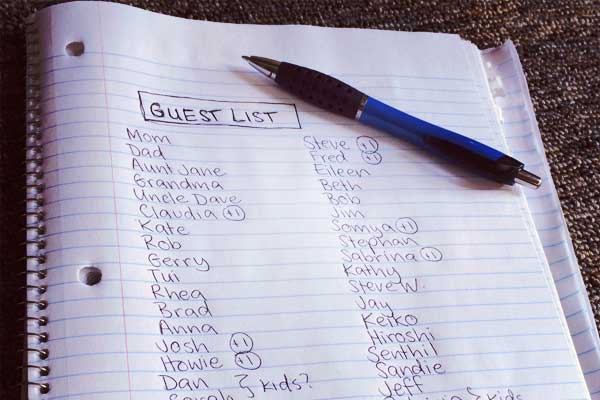
Keeping your guest list trim is one of the most important things you can do for your wedding budget. If you are worried that you will offend people by not inviting them, stop now. Of course you wouldn't leave out your nearest and dearest, but think of all those people who would be pleased to be invited but not bothered if they aren't. The best thing to do is to make some rules. That is, first cousins but not second. Spouses and live-in or serious partners (usually 6 months is the rule of thumb) but not dates. Your boss but not the whole office. That being said, don't split up groups - if you invite the whole office, fine - but don't just invite one.
The Dessert Table
Unless you are having a dessert reception, don't go overboard on sweets. Wedding cakes are so spectacular that offering a dessert buffet, a crepes stations, and mini ice cream sundaes is just excessive.
The Flowers
It is no surprise that over the top florals can add up your wedding costs quickly. You don't need to fill every corner of your venue with flowers for a lovely look. Work with your florists to use the freshest, in-season blooms to their advantage, then fill in the rest with budget-friendly candles or greenery. The look will still be beautiful. If you really adore flowers, consider a botanical garden as your venue - a beautiful backdrop is guaranteed.
Cocktail Hour
Don't overload guests with everything from sushi bars to hors d'oeuvres to pasta and carving stations. By keeping it short and sweet, you'll ensure you will need less food. Go for hand passed hors d'oeuvres instead of having stations. Only offer enough food to keep your guests from getting tipsy during your cocktail hour.
The Drinks
Feel free to skip the champagne toast and use the wine you have on the table. Create a bar that you can afford, whether that means only beer, wine and soft drinks; a signature cocktail and wine with dinner; or less-expensive liquors for mixed drinks. Keep it simple. The more variety the more expensive it will be.
Saturday, February 1, 2014
Plan a Wedding Without Losing Your Mind
Take some time.
When you first get engaged you are usually beside yourself with excitement - and rightly so! You call your parents, text your friends, post to Facebook, and start dreaming about your perfect dress. But before you start devoting your life to Pinterest boards, there are a few questions that a couple should ask themselves: What kind of people are you and your fiance? Do you love formal affairs, or are you more comfortable at casual gatherings? Who will be on your guest list - mostly old college friends or extended family members? These are the kinds of decisions that come first because they will determine the tone and even the setting of your wedding. Then you can begin to think about how you want your day to look. Flip through lots of magazines - not just bridal ones - and see what speaks to you style-wise. Even thinking about why you love the restaurants you do will help you shape your vision.
Make a budget.
Money is never a fun topic, but you have to know how much you can spend before you start reserving a 15-piece reception band. Once you both decide on your budget your options for your venue, vendors, and style will be much clearer. After that, if you are like most couples, you'll have to choose between having a smaller wedding with every thing you have ever dreamed of, or a larger event that means cutting out some extras like a photo booth or swans in the fountain.
Ponder working with a planner.
If you don't enjoy negotiating with vendors, handling contracts, or troubleshooting problems - a planner can handle all of this for you. If a planner is completely out of the question, maybe an on-site coordinator could help you make sure everything runs according to schedule the day of.
Select your setting.
Picking your venue is the hardest part of the puzzle - everything else will fall in to place once you have your venue like your catering and decor. Since many popular spaces can get booked up to a year in advance, you wil want to decide on your location and date as soon as possible. Choosing a site also means you will know whether you have to order tent rentals, extra bathrooms, and the like, which also affects your overall budget.
Friday, November 1, 2013
Top 10 most expensive wedding costs
The season of "I do" is upon us, and couples everywhere are gearing up to seal the deal -- romantically and financially.
According to online wedding planning resource TheKnot.com, the average amount spent on weddings, excluding honeymoons, in 2012 was $28,427. But is that realistic?
"You have some couples that will book celebrity-status bands for their wedding ... then you'll have couples who will want to do nothing more than just cover a space in flowers," says Anja Winikka, site editor for TheKnot.com.
Using TheKnot's data from 2009 to 2012, Bankrate crunched the numbers and found that although wedding budgets were hit by the U.S. economic downturn, couples managed to hand over hefty change for their big day. Here, in order from most to least expensive, are the top 10 categories in which couples spared no expense for jumping the broom.
Average cost in 2012: $12,095
Average cost in 2009: $12,838
Percentage change: -5.79 percent
With the average reception hall cost topping $12,000, frugal brides can find many places to trim costs.
Rather than outfitting the tables at your reception with expensive linens, use your tabletops to illustrate memories with large photo prints, says Richard O'Malley, a New York-based wedding and event planner.
"You get to actually see the couple through their lives on each table where everyone is sitting. Instead of spending $100 or more a tablecloth, you can actually get a personal thing that if you wanted, you could take home and do something with at some point."
Read the full article here: http://www.bankrate.com/lite/smart-spending/top-10-most-expensive-wedding-costs-2.aspx
Tuesday, October 1, 2013
The Quest for the Dress
If your search for the most spectacular gown is starting to feel like going to the dentist with no pain meds, then take a deep breath. Here are some of the best tips for when to start, whom to bring (hint: maybe not all of your bridesmaids) and how to navigate styles, sales, and fittings.
1. Set a Budget
I know this seems really basic, but shopping without a budget for your gown is like driving a car without a gas gauge. Plan to spend about 10% of your wedding budget on your dress - but consider this a starting point. If your dress is more important to you than the flowers then feel free to adjust your budget.
2. Start Early
Looking for a dress before you are even engaged is a bit much - but start as soon as you have that ring. It can take from 6-12 months from the time you order your dress until you bring it home. Unless you are lucky enough to find the perfect dress all ready for alterations, keep in mind that the designer needs time to make your gown and you should plan on about three dress fittings - roughly one month apart.
3. Do Your Research
Pull pages from magazines, browse the internet, online galleries and Pinterest boards for inspirations. Keep everything together in a folder - pictures, fabric samples, ribbons - all of the things that you love. Most dress shops will not have all of their dresses on display so the more things you can show to help a salesperson pull the designs - the more you are likely to love them.
4. Make Appointments
Once you have an idea of what you want, it is time to set up some appointments. Many salons and boutiques do not work on a walk-in basis so call about two weeks in advance to make an appointment. If you have a particular designer in mind - call around to see who carries that designer or price points.
5. Limit your Entourage
If you watch reality shows then you probably have seen the entire bridal party with the bride when she goes to find 'the dress.' It rarely works out well and there is almost always drama! The best advice is to bring one or two people whose opinion you value the most. If you really want to include your bridal party - then have them come in for your final fitting and do a grand reveal.
6. Primp Beforehand
If you go in to pick out a dress with wet hair and no makeup it is much harder to visualize how you will truly look on your big day. Not to mention that this makes it much harder for the consultant to get an idea of your style. If you already have your heels or a special memento that you are planning to wear then bring it to your appointment - this too will help.
7. Step Out of Your Comfort Zone
A simple truth: some dresses look like a paper bag until you actually put it on - and then it looks fabulous! With that in mind, don't turn up your nose until you try something on. The consultant has a good idea of what will look good on you so trust them at least until you see it on. That said, don't let a pushy salesperson or a well-meaning Mom sweet talk you into something you really don't love!
Wedding Gown Shapes Explained
A-Line: The classic 50s cut camouflages hips and balances wide shoulders
Ball Gown: This iconic wedding dress's full skirt helps accentuate the small of your waist
Fit and Flare: Got curves? Showcase them. This gown should fit snugly in the hips and thighs but offer enough room to sit.
Strapless: Sweetheart or straight, this cut flatters all bodies
Halter: Along with one-shoulder silhouettes, this sculpted style is especially beautiful on brides with long torsos
V-neck: Fuller figured? Take the plunge. It draws the eye right to the smallest part of your waist.
Thursday, September 5, 2013
Weddings and Technology
Besides slideshows, how are couples integrating technology into their weddings?
From the International Panel of Wedding Planners and Designers:
Kristin Banta
KRISTIN BANTA EVENTS / LOS ANGELES
Before the actual wedding day, couples are using technology in a number of ways. Most couples are now building wedding websites to streamline where and how information is distributed. Additionally, many couples are now using Pinterest to put together their ideas and concepts in order to more efficiently and effectively communicate their vision to their team of collaborators.
Once the wedding day arrives, many couples are creating dedicated hashtags for their wedding, so that they are more easily able to find their family and friend's photos from their wedding on instagram and twitter. Additionally, newly weds are often posting wedding albums to facebook days (or mere hours) after their weddings have taken place.
Kelly Hood
BOHO WEDDINGS & EVENTS / SHEFFIELD UK
Playlists using Ipods and spotify are very popular instead of using a DJ, instagram for instant images of the wedding across twitter and Facebook. Couples creating their own wedding websites for guests information as well as wedding invitations.
Saundra Hadley
PLANNING FOREVER / MIDWEST
Instagram is the latest craze to promote the wedding while it's happening. Creating signage that indicates the #hashtag to use so guests can participate in promoting wedding photos. We are also seeing Pinterest being used for wedding party collaboration in the planning process. Closes the gap between family members that live all over the world.
Wayne Gurnick
MOMENTS BY WAYNE / LOS ANGELES
Technology plays a very important part in the wedding planning because for most couples, it’s an integral part of their daily life. It’s standard practice to use the web to research, find and purchase products and services – wedding invitations, party favors, accessories and even bridal gowns. Couples are also setting up wedding web sites and registries online and using social media to communicate with family and friends.
Pinterest and other image sharing web properties help couples research and share everything wedding. Some couples use video streaming to share their wedding ceremony with those that are not able to attend.
An exciting new way to use technology is instantly sharing Photo Booth images via social media. Computer generated images projected on the aisle during the ceremony and on the dance floor during the reception are on my list of favorites – these capabilities are made possible and affordably by technology.
Bruce Russell Chiason
BY BRUCE RUSSELL / LONDON
The most common request is couples wanting to broadcast their ceremony on Skype, so family & friends who can't attend are able to share in their special day.
On one occasion, a couple had iPads on each table, which provided guests with details such as the evening's itinerary, menu, and entertainment. They also had information about each guest at the table and how each knew the bride & groom. Guests could also use it to record personal messages and take photos throughout the evening, sharing them on Facebook & Twitter. It was fun and interactive.
Karry Castillo
UNIQUELY YOURS / ORLANDO
One of our client couples recently shared a mini- cinematic film prior to their introduction into their reception . The film highlighted how they met, dated, and proposed. The bride had an amazing dramatic flair and sharp wit which when combined with her stage experiences resulted in a comedic and heartfelt film.
Past clients have also incorporated technology through live simulcasts of their ceremonies with family overseas, flipbook stations via The Flipbook People, photo sharing through Wedding Snap, personal wedding websites, same day video edits, and choreographed lighting for reception events just to name a few.
See the rest of the answers here: http://weddingindustryexperts.com/pd4.html
How are you planning to incorporate techy goodies in your wedding?
Sunday, September 1, 2013
5 Common Mistakes When Ordering your Wedding Invitations
"Mistake" is not a word you want associated with your wedding! You want everything to be perfect, including the invitation-and that means making sure the wording is right, all the information is included, and the invitation gets delivered in plenty of time for people to get the event on their calendars. It seems like a no-brainer, but with hundreds of other wedding-related tasks crowding your brain, you might overlook something important. Use this handy guide to the top mistakes made when ordering wedding invitations and how to prevent them, and you'll have one less worry heading into the big day!
1) Underestimating the number of invitations needed
I recommend (and this comes from years of experience!) ordering twenty to thirty extra invitations. Inevitably, the wedding guest list will grow even after you have compiled a complete list from your own and those of the groom, your parents, and the groom's parents. Order an additional twenty to thirty invitations, and you'll have a potentially life-saving buffer! Even if your guest list doesn't grow, you can use the extras to replace any invitations that are returned in the mail or fail to arrive because of incorrect addresses. These scenarios are often unexpected by brides and grooms, but they are common. I strongly advise double-checking ZIP codes at usps.com to ensure mailing addresses are correct.
2) Using incorrect postage and failing to hand-cancel the envelopes
Once you receive your wedding invitations, assemble one and then head to the post office. Have the assembled wedding invitation weighed to confirm the amount of postage needed. Then ask the clerk to show you all the stamps in that postage rate so you can choose one that coordinates with your envelope color and is similar to your theme. Or go a step further and personalize it - I offer matching postage for all of my wedding designs.
You've taken great care so far to create your dream invitation-why risk ruining it by having it machine-stamped at the post office? Have the post office hand-cancel your envelopes so that the invitations inside arrive undamaged (if your invites have embellishments of any kind, this is especially important!). Plus, the stamp used is smaller and more discreet than the machine stamp, so it won't distract even from the look of the painstakingly addressed envelope! (Just bear in mind that hand-stamping is more time-consuming for the post office, so they may ask you to come back at a less-busy time of day.)
Since you are going to have your envelopes hand-canceled, make sure to leave about a quarter inch to a half inch in the upper right hand corner of the envelope when affixing the stamp. This will allow room for the postage-canceling stamp.
Mailing time for wedding invitations - Wedding invitations should be mailed 4 to 6 weeks before the event. It is best to mail your invitations on a Saturday. That way the wedding invitation will arrive at the beginning of the week, when more people pay attention to their mail.
3) Letting mistakes and typos slip through
When ordering your invitations, proofread, proofread, and then proofread again! Read the copy aloud, letting your ears catch errors that your eyes may miss. Spell out names, the date, the time, and the year to ensure that every detail is absolutely clear to the invitee.
4) Not ordering far enough in advance
Wedding invitations should be ordered three to four months ahead of the wedding date. Remember, you will be mailing the invitations out six weeks before the celebration, and you'll have to address the envelopes, assemble the invitations, and add postage. Not to mention the hundreds of other items on your wedding to-do list!
5) Not including an RSVP Date
Wedding planning is stressful enough; don't add to the stress by having to guess your head count! You'll want to know how much to set aside if you'll be paying per head at a dinner reception-and how much food to have! Enclose a matching RSVP card with your invitation that includes an RSVP date. A response date of two weeks before the event is standard. Be sure to allow enough time between the RSVP date and your caterer's deadline for those late responders.
Without the people you know and love there to celebrate with you, your wedding wouldn't be as special. And without an accurate invitation delivered in a timely manner, those people won't be there! So take a few extra steps to ensure your invitation is exactly what you want and exactly what your guests need. A happy and stress-free wedding is so worth the effort!
Wednesday, August 21, 2013
Your Wedding: How to Plan and What Does it Mean?
This new series called, Your Wedding: How to Plan and What Does it Mean? will be a series of articles giving you a 'quick reference' to keep handy - what happens first, who is invited to what, and who pays? Follow my blog to have easy access to all of them as they appear.
Want to get the most out of your meetings with vendors?
There are plenty of wedding vendors out there, but not just anyone will do. You need to find the right pro and negotiate for the best price so you can be sure that, when the big day comes, you'll get exactly what you want. These tips will help.
Set Your Budget and Style
Before you meet with a vendor, be sure that you've determined your total budget. Then, prioritize with your fiancé—if you're foodies, for example, you might spend more on dinner and cut back on flowers.
Next, you and your groom should discuss the style you envision. Will it be simple, minimalist floral arrangements or a lavish display? A sit-down dinner or chef-manned food stations? Even if you don't have a specific vision in mind, you should know your likes and dislikes. This is your event, and you want to make sure the vendor can carry out the job the way you want it done.
Comparison-Shop
For some vendors, especially photographers, you can call ahead to find out the fee for a package of services. For others (like florists) you'll need to meet with the pro and get a price quote for the services you decide upon. Either way, visit several vendors for each service to get an idea of their work and prices. Always check a vendor's reputation with the Better Business Bureau, and request the pro's references (and be sure to call them!).
Be sure to stick to your original plan. There's a vendor that is a perfect match for every couple. If you can't get what you want from a vendor in your price range, or if the person seems difficult to work with, keep shopping around.
Cover the Details
Once you decide to hire a vendor, discuss all the details of the services he or she will provide, and be sure you fully understand them. If you're purchasing a package, find out how many hours are covered, and whether there are any inclusions you haven't discussed, like free champagne in the limousine. Always ask about any extra fees before you put anything in writing—some caterers may add corkage or cake-cutting fees, for example.
When you're ready to sign on the dotted line, check that all the specifics are included on the contract—in as much detail as possible. The contract must include the date, time of delivery or arrival, number of hours of service and a description of the goods you're paying for. Also, be sure anything you don't want—say, carnations—is on there, too. That way, you'll know what to expect on the big day.
Avoid Rip-Offs
Putting On the Pressure:
A vendor may try to rush you into putting down a deposit by offering a “today only” deal, or telling you they’re about to book up. Calmly explain that you need time to think it over. Don’t make payments for anything unless you’re sure you want it.
Making Nice:
Some sales people may act friendly just to make a sale. Don’t buy a dress you’re not completely in love with simply because the salesperson paid you a compliment. Shop around for a gown you know you love and that fits your budget.
Tacking On Charges:
A vendor may unexpectedly add a little extra to the price you’ve agreed upon and explain that it’s for taking group photos at the tables, for example. Be nice but firm. Say you’d like to avoid paying the fee and ask to have it waived. You can bring up the fact that you can get a better rate elsewhere, if that’s the case. Or say you’ll pay for the additional shots, but you’d like some extra prints as well.
Book early, and you're more likely to get the vendors you want.
I feel terrible when someone contacts me two months before their date, saying they love my work and to ask me if I am available, and I have to say no. I seriously feel bad. In-demand wedding vendors (and isn’t that who you want?) get booked for dates 6 months to a year in advance. For dates in the ‘wedding season’ (between May and September), they can be booked even earlier.
You'll Eliminate Stress
Do you really want put everything together at the last minute? While planning my own wedding a year in advance, there were enough problems just figuring out the logistics. And then little things always seem to come up at the last minute. Book early and get the stress out of the way. That way, if there are any problems or last-minute surprises, you can focus on those instead of having to worry about who is going to do your flowers, take your pictures, or marry you to one another!
You'll Spread Out Your Payments
Concerned about money? Think of booking early like using layaway – would you rather pay for the entire wedding all at once or spread out those payments over a year long period?
You'll Lock In Lower Rates
Once you book your vendors, you have locked them in at that rate. Wait six months, and they might be charging more money for their services.
Prepare for Wedding Vendor Meetings
Want to get the most out of your meetings with vendors?
There are plenty of wedding vendors out there, but not just anyone will do. You need to find the right pro and negotiate for the best price so you can be sure that, when the big day comes, you'll get exactly what you want. These tips will help.
Set Your Budget and Style
Before you meet with a vendor, be sure that you've determined your total budget. Then, prioritize with your fiancé—if you're foodies, for example, you might spend more on dinner and cut back on flowers.
Next, you and your groom should discuss the style you envision. Will it be simple, minimalist floral arrangements or a lavish display? A sit-down dinner or chef-manned food stations? Even if you don't have a specific vision in mind, you should know your likes and dislikes. This is your event, and you want to make sure the vendor can carry out the job the way you want it done.
Comparison-Shop
For some vendors, especially photographers, you can call ahead to find out the fee for a package of services. For others (like florists) you'll need to meet with the pro and get a price quote for the services you decide upon. Either way, visit several vendors for each service to get an idea of their work and prices. Always check a vendor's reputation with the Better Business Bureau, and request the pro's references (and be sure to call them!).
Be sure to stick to your original plan. There's a vendor that is a perfect match for every couple. If you can't get what you want from a vendor in your price range, or if the person seems difficult to work with, keep shopping around.
Cover the Details
Once you decide to hire a vendor, discuss all the details of the services he or she will provide, and be sure you fully understand them. If you're purchasing a package, find out how many hours are covered, and whether there are any inclusions you haven't discussed, like free champagne in the limousine. Always ask about any extra fees before you put anything in writing—some caterers may add corkage or cake-cutting fees, for example.
When you're ready to sign on the dotted line, check that all the specifics are included on the contract—in as much detail as possible. The contract must include the date, time of delivery or arrival, number of hours of service and a description of the goods you're paying for. Also, be sure anything you don't want—say, carnations—is on there, too. That way, you'll know what to expect on the big day.
Avoid Rip-Offs
Putting On the Pressure:
A vendor may try to rush you into putting down a deposit by offering a “today only” deal, or telling you they’re about to book up. Calmly explain that you need time to think it over. Don’t make payments for anything unless you’re sure you want it.
Making Nice:
Some sales people may act friendly just to make a sale. Don’t buy a dress you’re not completely in love with simply because the salesperson paid you a compliment. Shop around for a gown you know you love and that fits your budget.
Tacking On Charges:
A vendor may unexpectedly add a little extra to the price you’ve agreed upon and explain that it’s for taking group photos at the tables, for example. Be nice but firm. Say you’d like to avoid paying the fee and ask to have it waived. You can bring up the fact that you can get a better rate elsewhere, if that’s the case. Or say you’ll pay for the additional shots, but you’d like some extra prints as well.
Book early, and you're more likely to get the vendors you want.
I feel terrible when someone contacts me two months before their date, saying they love my work and to ask me if I am available, and I have to say no. I seriously feel bad. In-demand wedding vendors (and isn’t that who you want?) get booked for dates 6 months to a year in advance. For dates in the ‘wedding season’ (between May and September), they can be booked even earlier.
You'll Eliminate Stress
Do you really want put everything together at the last minute? While planning my own wedding a year in advance, there were enough problems just figuring out the logistics. And then little things always seem to come up at the last minute. Book early and get the stress out of the way. That way, if there are any problems or last-minute surprises, you can focus on those instead of having to worry about who is going to do your flowers, take your pictures, or marry you to one another!
You'll Spread Out Your Payments
Concerned about money? Think of booking early like using layaway – would you rather pay for the entire wedding all at once or spread out those payments over a year long period?
You'll Lock In Lower Rates
Once you book your vendors, you have locked them in at that rate. Wait six months, and they might be charging more money for their services.
Monday, August 19, 2013
Your Wedding: How to Plan and What Does it Mean?
This new series called, Your Wedding: How to Plan and What Does it Mean? will be a series of articles giving you a 'quick reference' to keep handy - what happens first, who is invited to what, and who pays? Follow my blog to have easy access to all of them as they appear.
Zoom in on the latest wedding video trends, and find the best match for your needs. Then, choose the video pro to make it happen.
Even more than photographs, a wedding video truly captures the spirit and magic of your big day—in living color. And, thanks to advancements in digital technology, the quality of these videos has improved dramatically over the years. Instead of using the large, obtrusive analog (VHS) cameras that were standard 10 years ago, most videographers now shoot with small, discreet digital video cameras.
Also, you'll probably get a video mastered in DVD format, ensuring better picture quality and a shelf life of 100 years (as opposed to 15 years with a VHS tape). What can you expect your video to look like? Here's an overview of your options, plus how to get the most for your money, and some tips on finding the right pro.
Basic Service
"Point-and-shoot" videographers, as they're known, provide only elementary documentation of your day, so they're your least expensive option (around $1,000). If you've seen any of your friends' wedding videos…well, you get the picture.
While these videos adequately deliver a record of the events, some brides have told us that their "point-and-shoot" videos look a bit cheesy, thanks to the pros' use of gimmicky animated graphics and sound effects—you might want to tell your pro to tone down these kinds of treatments.
Also, tell your videographer not to approach your guests, prodding them to "say a few words" to the camera: This is considered very passé. And be sure to specify the music you want included in the soundtrack (videographers tell us that a popular pick is "The Blower's Daughter," by Damien Rice, which was featured in the movie Closer).
Choosing a Wedding Videographer
Zoom in on the latest wedding video trends, and find the best match for your needs. Then, choose the video pro to make it happen.
Even more than photographs, a wedding video truly captures the spirit and magic of your big day—in living color. And, thanks to advancements in digital technology, the quality of these videos has improved dramatically over the years. Instead of using the large, obtrusive analog (VHS) cameras that were standard 10 years ago, most videographers now shoot with small, discreet digital video cameras.
Also, you'll probably get a video mastered in DVD format, ensuring better picture quality and a shelf life of 100 years (as opposed to 15 years with a VHS tape). What can you expect your video to look like? Here's an overview of your options, plus how to get the most for your money, and some tips on finding the right pro.
Basic Service
"Point-and-shoot" videographers, as they're known, provide only elementary documentation of your day, so they're your least expensive option (around $1,000). If you've seen any of your friends' wedding videos…well, you get the picture.
While these videos adequately deliver a record of the events, some brides have told us that their "point-and-shoot" videos look a bit cheesy, thanks to the pros' use of gimmicky animated graphics and sound effects—you might want to tell your pro to tone down these kinds of treatments.
Also, tell your videographer not to approach your guests, prodding them to "say a few words" to the camera: This is considered very passé. And be sure to specify the music you want included in the soundtrack (videographers tell us that a popular pick is "The Blower's Daughter," by Damien Rice, which was featured in the movie Closer).
Thursday, August 15, 2013
Your Wedding: How to Plan and What Does it Mean?
This new series called, Your Wedding: How to Plan and What Does it Mean? will be a series of articles giving you a 'quick reference' to keep handy - what happens first, who is invited to what, and who pays? Follow my blog to have easy access to all of them as they appear.
Have your heart set on a particular reception site? Make sure you've answered these key questions before you book it.
You can't really set a wedding date until you've secured a You can't really set a wedding date until you've secured a location for your wedding reception (and ceremony), so the sooner you tackle this task, the better—do it 10 to 12 months in advance, if possible.
Once you've narrowed down your choices (a hotel? a banquet hall? a country club?), sit down with the banquet manager (or other representative) at each place to hash out the details. If you like what you hear, you can cross this task off your list and start planning the party itself.
Renting an all-inclusive hotel ballroom or banquet hall is a great idea, since these are likely to have well-trained staffs who have worked hundreds of weddings as well as a manager who will handle most of the details for you. However, don’t discount other wonderful venues that can give your party a little more personality:
• Aquarium
• Art gallery
• Baseball or football stadium
• Beach
• Botanical garden
• Campsite
• Casino
• College campus
• Cruise ship
• Dude ranch
• Fairgrounds
• Farm
• Historic mansion
• Industrial loft
• Island resort
• Lighthouse
• Museum (fine art, natural history, aviation, wax…)
• National park
• Opera house
• Planetarium
• Private home
• Private yacht
• Racetrack
• Restaurant
• Ski lodge
• Theater
• Theme park
• Vineyard
• Zoo
What services does the rental fee include?
Some reception halls provide catering services as well as all the necessary equipment (tables, chairs, linens, tableware and so on), while others offer only the room, requiring you to take care of all the equipment rentals.
To ensure that your party runs smoothly, the site should provide a banquet manager (or other senior staff member) who will be present on the day of your wedding at no extra charge. For an additional fee, you might also be able to arrange for valet parking, a restroom attendant and a coat room attendant.
Is the rental fee cheaper if we don't book a Saturday night?
Saturday night weddings are the most expensive, since that's the most sought-after time. But if you book a Friday or Sunday night you'll likely get a better rate—about 30% lower—simply because those days are less in-demand. Rental fees also vary per month—you'll get a better deal if you book a date during low season (usually the months of November through April).
Are you hosting other events before, during or after ours on the same day?
Try to avoid booking a banquet hall that's hosting another wedding simultaneously—you want the staff's attention to be focused entirely on your event. It's more common for sites to book an afternoon and evening event on the same day, which usually isn't a problem.
Most sites are rented in four-hour increments, with two hours built in on both sides of the event, so that your vendors will have time to set it up and break it down. If your wedding is going to require more than two hours' worth of styling, consider booking a site that has no other receptions planned that day so your vendors won't feel rushed.
Can we bring in our own caterer?
If your location offers catering, this probably won't be allowed. However, if your site does
welcome outside caterers, you may be required to choose from a list of "preferred" vendors—companies the site managers trust and who know the ins-and-outs of the reception space's kitchen and dining areas.
What is your alcohol policy?
Your catering fee might include a full open bar, for which you'll be charged either a flat fee or by
the hour—or you may have the option of being charged based on what, and how much, guests actually consume. Some sites don't have liquor licenses, in which case you'll have to purchase the booze yourself. Or, if you're using an independent caterer, you can ask him or her to handle the specifics for you.
Are your health-department and insurance certificates up to date?
Reputable sites meet health codes and carry liability insurance in case someone becomes severely injured while on the property. If there's no paperwork to prove these things, you don't want to do business there.
Are there adequate restroom facilities?
Always check out the toilet situation. Look for cleanliness, of course, and make sure the bathrooms can accommodate your crowd. In general, you'll need at least two bathroom stalls for every 100 guests; for 150 guests, four or more stalls are ideal.
Can you accommodate physically challenged guests?
While most buildings will have ramps and elevators, don't just take the manager's word for it. Do a walk-through to see for yourself how well these features will meet the needs of your wheelchair-
bound guests. Look for spacious elevators, wide ramps and doorways, handicapped-accessible bathroom stalls in both the men's and women's restrooms and so on.
Is there air-conditioning?
Don't assume. Ask. If you're getting married in the hot summer months, this is essential to your and your guests' comfort.
Are there any restrictions we need to know about?
If a site is located in a heavily residential area, it might be held to noise restrictions set forth by the community—meaning, you may be required to close down your party at a certain hour (10 p.m. is a common cut-off time). Also ask about fire hazards—some sites do not allow the use of taper candles or sparklers, for instance.
What is your payment and cancellation policy?
If you've chosen a site and are satisfied with the services promised, you will be asked to sign a contract that includes everything that's been discussed verbally—such as the name of the room you're
renting, the items provided and the number of staff, the times allowed for setup and breakdown, the hours allotted for your party, the taxes and even the gratuities. Upon signing, you may be asked to provide a security deposit (find out if, and under what circumstances, your money is refundable, and make sure this is clearly stated in the contract).
11 Important Wedding Reception Site Questions
Have your heart set on a particular reception site? Make sure you've answered these key questions before you book it.
You can't really set a wedding date until you've secured a You can't really set a wedding date until you've secured a location for your wedding reception (and ceremony), so the sooner you tackle this task, the better—do it 10 to 12 months in advance, if possible.
Once you've narrowed down your choices (a hotel? a banquet hall? a country club?), sit down with the banquet manager (or other representative) at each place to hash out the details. If you like what you hear, you can cross this task off your list and start planning the party itself.
Renting an all-inclusive hotel ballroom or banquet hall is a great idea, since these are likely to have well-trained staffs who have worked hundreds of weddings as well as a manager who will handle most of the details for you. However, don’t discount other wonderful venues that can give your party a little more personality:
• Aquarium
• Art gallery
• Baseball or football stadium
• Beach
• Botanical garden
• Campsite
• Casino
• College campus
• Cruise ship
• Dude ranch
• Fairgrounds
• Farm
• Historic mansion
• Industrial loft
• Island resort
• Lighthouse
• Museum (fine art, natural history, aviation, wax…)
• National park
• Opera house
• Planetarium
• Private home
• Private yacht
• Racetrack
• Restaurant
• Ski lodge
• Theater
• Theme park
• Vineyard
• Zoo
What services does the rental fee include?
Some reception halls provide catering services as well as all the necessary equipment (tables, chairs, linens, tableware and so on), while others offer only the room, requiring you to take care of all the equipment rentals.
To ensure that your party runs smoothly, the site should provide a banquet manager (or other senior staff member) who will be present on the day of your wedding at no extra charge. For an additional fee, you might also be able to arrange for valet parking, a restroom attendant and a coat room attendant.
Is the rental fee cheaper if we don't book a Saturday night?
Saturday night weddings are the most expensive, since that's the most sought-after time. But if you book a Friday or Sunday night you'll likely get a better rate—about 30% lower—simply because those days are less in-demand. Rental fees also vary per month—you'll get a better deal if you book a date during low season (usually the months of November through April).
Are you hosting other events before, during or after ours on the same day?
Try to avoid booking a banquet hall that's hosting another wedding simultaneously—you want the staff's attention to be focused entirely on your event. It's more common for sites to book an afternoon and evening event on the same day, which usually isn't a problem.
Most sites are rented in four-hour increments, with two hours built in on both sides of the event, so that your vendors will have time to set it up and break it down. If your wedding is going to require more than two hours' worth of styling, consider booking a site that has no other receptions planned that day so your vendors won't feel rushed.
Can we bring in our own caterer?
If your location offers catering, this probably won't be allowed. However, if your site does
welcome outside caterers, you may be required to choose from a list of "preferred" vendors—companies the site managers trust and who know the ins-and-outs of the reception space's kitchen and dining areas.
What is your alcohol policy?
Your catering fee might include a full open bar, for which you'll be charged either a flat fee or by
the hour—or you may have the option of being charged based on what, and how much, guests actually consume. Some sites don't have liquor licenses, in which case you'll have to purchase the booze yourself. Or, if you're using an independent caterer, you can ask him or her to handle the specifics for you.
Are your health-department and insurance certificates up to date?
Reputable sites meet health codes and carry liability insurance in case someone becomes severely injured while on the property. If there's no paperwork to prove these things, you don't want to do business there.
Are there adequate restroom facilities?
Always check out the toilet situation. Look for cleanliness, of course, and make sure the bathrooms can accommodate your crowd. In general, you'll need at least two bathroom stalls for every 100 guests; for 150 guests, four or more stalls are ideal.
Can you accommodate physically challenged guests?
While most buildings will have ramps and elevators, don't just take the manager's word for it. Do a walk-through to see for yourself how well these features will meet the needs of your wheelchair-
bound guests. Look for spacious elevators, wide ramps and doorways, handicapped-accessible bathroom stalls in both the men's and women's restrooms and so on.
Is there air-conditioning?
Don't assume. Ask. If you're getting married in the hot summer months, this is essential to your and your guests' comfort.
Are there any restrictions we need to know about?
If a site is located in a heavily residential area, it might be held to noise restrictions set forth by the community—meaning, you may be required to close down your party at a certain hour (10 p.m. is a common cut-off time). Also ask about fire hazards—some sites do not allow the use of taper candles or sparklers, for instance.
What is your payment and cancellation policy?
If you've chosen a site and are satisfied with the services promised, you will be asked to sign a contract that includes everything that's been discussed verbally—such as the name of the room you're
renting, the items provided and the number of staff, the times allowed for setup and breakdown, the hours allotted for your party, the taxes and even the gratuities. Upon signing, you may be asked to provide a security deposit (find out if, and under what circumstances, your money is refundable, and make sure this is clearly stated in the contract).
Tuesday, August 13, 2013
Your Wedding: How to Plan and What Does it Mean?
This new series called, Your Wedding: How to Plan and What Does it Mean? will be a series of articles giving you a 'quick reference' to keep handy - what happens first, who is invited to what, and who pays? Follow my blog to have easy access to all of them as they appear.
1. Is working within my budget feasible?
Before you schedule appointments with potential florists (search Photo of the Day and Pinterest for ideas), get a feel for their prices first. You don’t want to fall in love with the perfect floral arrangements for your wedding just to find out they won’t be able to work within your budget. After that, nothing will live up to what you’ve seen, and you will end up overspending on flowers for your big day. Open the lines of communication and tell the florist what your plans are (how many bridal party attendants you’ll have, the number of guests and/or tables, and what you have in mind for the décor), which should help them give you a solid "yes" or "no." Book with caution if you get a "maybe"—find someone with a similar style whose stellar services you can afford.
2. Are my favorite flowers currently in season?
If you’re enamored with the full, lush look of peonies (but are planning November nuptials), then be prepared to pay top dollar for choosing blooms that are out of season. If you don't ask about availability, florists will still use your favorite flowers, but it could cost you. That doesn’t mean you have to sacrifice your vision completely: Try finding in-season flora with a similar look or using pricier flowers sparingly. It’s always more cost-effective to be flexible with your flower selections.
3. How long have you been doing weddings?
Although someone might be a top-tier florist, it doesn't necessarily mean they are skilled at creating wedding bouquets and centerpieces (which require different techniques than other types of floral arrangements). Experience is also a huge factor: Someone who has been cranking out the same designs for 20 years may not be the best fit for the unique wedding style that you want, while a visionary up-and-comer may share your design sense, but they might not have the notches on their
belt to be able to execute their designs in a professional and timely manner. The key is to select a vendor who strikes a balance and can satisfy your particular needs.
4. What is your style (modern, classic, natural or glam)?
Close your eyes and imagine the décor of your fantasy reception (all costs aside). What do you see? An enchanted forest with trees covered in twinkly lights? Tall, all-white centerpieces with a classic look and feel? Or perhaps romantic blooms spilling out of rhinestone-encrusted containers? While florists don’t have to stick to their own personal style, their work will shine if it’s closer to what they’re used to creating.
5. Can we see a portfolio of photographs from previous weddings you have worked on?
Floral arrangements from past clients will give you a sense of how the florist's style has evolved over time (if at all), and show what their specialities are. Pay close attention to the florist’s feedback when you show them photos or collages you’ve brought with you—this input can be equally important. Is the style familiar to them? Is this something they have created before? Do they seem to be comfortable with what you are asking for?
6. Do you take more than 1 wedding per day? How many weddings or events do you have the same week as our wedding?
If a florist says they book four to six events per weekend and have their staff install for them, ask how many lead designers they have on staff. You don’t want a florist who spreads themselves too thin, which can lead to errors. If you want something unique and if you need a little more hand-holding during the design process, don’t book someone who already has their hands full and won’t give you the attention you are seeking.
7. Will you make samples for me to see, and work with me to adjust them as needed?
No matter how impressive a florist’s photos are, you must see a mock-up to determine if they can truly bring your vision to life. Most floral designers will include a mock-up if you meet a certain minimum, while others will only do one at an additional cost…if you’re the type of bride who needs to see it beforehand so you know you love it, then be sure your florist includes a prototype as part of their package. This gives you both the chance to make any necessary adjustments long before the big day and find out how they will impact your budget.
8. Do you advise on linens, upgraded chairs and table settings?
We recommend hiring someone who takes an interest in the overall look of your décor (linens, chairs, tableware and lighting)—not just your flowers. Some designers will handle upgraded linens and rentals as part of their bid (which usually means they are marking them up), others will choose extras but have the coordinator handle the bids, and some won’t even take part in this process at all. You need to know what their role will be.
9. How do you charge: flat fee or per item? Is there a delivery charge?
Clarify how their pricing works before you sign on the dotted line. Find out exactly what the package includes and what costs extra (e.g. is that gorgeous vase yours to keep, or will you be slapped with a hefty bill if a guest takes it home). Make sure to find out if there is a delivery fee, an on-site transaction fee or any other places additional charges may occur. Your estimate should reflect all costs associated with the entire completion of your wedding.
10. Do you have liability insurance? What is the refund/cancellation process? When is payment due?
These days, venues aren't taking any risks: Many require liability insurance policies by all vendors, including your florist. There are other factors that could affect payment, such as changing your wedding date or canceling the florist for another one. Also look into their payment plan, which includes a deposit and subsequent payments.
10 Questions to Ask Before Booking Your Florist
1. Is working within my budget feasible?
Before you schedule appointments with potential florists (search Photo of the Day and Pinterest for ideas), get a feel for their prices first. You don’t want to fall in love with the perfect floral arrangements for your wedding just to find out they won’t be able to work within your budget. After that, nothing will live up to what you’ve seen, and you will end up overspending on flowers for your big day. Open the lines of communication and tell the florist what your plans are (how many bridal party attendants you’ll have, the number of guests and/or tables, and what you have in mind for the décor), which should help them give you a solid "yes" or "no." Book with caution if you get a "maybe"—find someone with a similar style whose stellar services you can afford.
2. Are my favorite flowers currently in season?
If you’re enamored with the full, lush look of peonies (but are planning November nuptials), then be prepared to pay top dollar for choosing blooms that are out of season. If you don't ask about availability, florists will still use your favorite flowers, but it could cost you. That doesn’t mean you have to sacrifice your vision completely: Try finding in-season flora with a similar look or using pricier flowers sparingly. It’s always more cost-effective to be flexible with your flower selections.
3. How long have you been doing weddings?
Although someone might be a top-tier florist, it doesn't necessarily mean they are skilled at creating wedding bouquets and centerpieces (which require different techniques than other types of floral arrangements). Experience is also a huge factor: Someone who has been cranking out the same designs for 20 years may not be the best fit for the unique wedding style that you want, while a visionary up-and-comer may share your design sense, but they might not have the notches on their
belt to be able to execute their designs in a professional and timely manner. The key is to select a vendor who strikes a balance and can satisfy your particular needs.
4. What is your style (modern, classic, natural or glam)?
Close your eyes and imagine the décor of your fantasy reception (all costs aside). What do you see? An enchanted forest with trees covered in twinkly lights? Tall, all-white centerpieces with a classic look and feel? Or perhaps romantic blooms spilling out of rhinestone-encrusted containers? While florists don’t have to stick to their own personal style, their work will shine if it’s closer to what they’re used to creating.
5. Can we see a portfolio of photographs from previous weddings you have worked on?
Floral arrangements from past clients will give you a sense of how the florist's style has evolved over time (if at all), and show what their specialities are. Pay close attention to the florist’s feedback when you show them photos or collages you’ve brought with you—this input can be equally important. Is the style familiar to them? Is this something they have created before? Do they seem to be comfortable with what you are asking for?
6. Do you take more than 1 wedding per day? How many weddings or events do you have the same week as our wedding?
If a florist says they book four to six events per weekend and have their staff install for them, ask how many lead designers they have on staff. You don’t want a florist who spreads themselves too thin, which can lead to errors. If you want something unique and if you need a little more hand-holding during the design process, don’t book someone who already has their hands full and won’t give you the attention you are seeking.
7. Will you make samples for me to see, and work with me to adjust them as needed?
No matter how impressive a florist’s photos are, you must see a mock-up to determine if they can truly bring your vision to life. Most floral designers will include a mock-up if you meet a certain minimum, while others will only do one at an additional cost…if you’re the type of bride who needs to see it beforehand so you know you love it, then be sure your florist includes a prototype as part of their package. This gives you both the chance to make any necessary adjustments long before the big day and find out how they will impact your budget.
8. Do you advise on linens, upgraded chairs and table settings?
We recommend hiring someone who takes an interest in the overall look of your décor (linens, chairs, tableware and lighting)—not just your flowers. Some designers will handle upgraded linens and rentals as part of their bid (which usually means they are marking them up), others will choose extras but have the coordinator handle the bids, and some won’t even take part in this process at all. You need to know what their role will be.
9. How do you charge: flat fee or per item? Is there a delivery charge?
Clarify how their pricing works before you sign on the dotted line. Find out exactly what the package includes and what costs extra (e.g. is that gorgeous vase yours to keep, or will you be slapped with a hefty bill if a guest takes it home). Make sure to find out if there is a delivery fee, an on-site transaction fee or any other places additional charges may occur. Your estimate should reflect all costs associated with the entire completion of your wedding.
10. Do you have liability insurance? What is the refund/cancellation process? When is payment due?
These days, venues aren't taking any risks: Many require liability insurance policies by all vendors, including your florist. There are other factors that could affect payment, such as changing your wedding date or canceling the florist for another one. Also look into their payment plan, which includes a deposit and subsequent payments.
Friday, August 9, 2013
Your Wedding: How to Plan and What Does it Mean?
This new series called, Your Wedding: How to Plan and What Does it Mean?
will be a series of articles giving you a 'quick reference' to keep
handy - what happens first, who is invited to what, and who pays? Follow
my blog to have easy access to all of them as they appear.
1. Is photography your main business? What percentage of your work is composed of weddings?
First, you need to gauge how much experience a potential vendor has. Photographers' time commitments and skill sets vary—some only work part-time or might mostly photograph something else (e.g. portraits). This doesn't necessarily mean they won't do an amazing job as your wedding photographer, but it will give you a sense of what they will be able to contribute towards your nuptials. A busy full-time wedding photographer will probably shoot between 20 and 30 weddings a year.
2. How long have you been photographing weddings? Can I see a list of references and/or reviews?
This follow-up question is another indicator of experience and will reflect accordingly in the pricing. "I am often asked (usually by the father of the bride), 'What justifies your prices?' My reply is simple: 'Time.' I've been photographing weddings for 15 years, nine of which were my primary source of income," says Josh Lynn. References are absolutely critical—ask around (recently-married friends and other vendors you've booked can be great sources), read anonymous reviews online and speak to former clients.
3. Have you ever worked at our location before?
"It's often comforting for clients to hear that I have worked at the venue and even know the staff by name," says Lynn. If they haven't shot there before, ask if they would be willing to visit your venue before the wedding to acquaint themselves with the layout. Each location comes with its own unique advantages and challenges.
4. Will you be my photographer on the day of the wedding? What is your plan if you are unable to attend due to illness or unforeseen circumstances?
Some larger studios might book your appointment with a sales rep or agent. Ask to schedule a follow-up meeting where the actual photographer assigned to your wedding is present, so that you can get a sense of their personality and demeanor before you sign on the dotted line. Ask what happens in case of an emergency—it's crucial to have a solid back-up plan so that you're not scrambling for a replacement if they get rushed to the hospital or have to miss the event because of a death in the family.
5. Can we see a recent finished set of proofs from an entire wedding?
Samples are great, but seeing an entire wedding from start to finish is equally important to see how the entire day is covered. As you flip through the album, pay close attention to the style of the photography and make sure it matches what you had in mind for your own. Keep a mental checklist to determine that they covered all of the major moments (e.g. cake toss, first dance) as well as fun, candid shots. Think about the entire album as a whole—it should evoke your emotions and give you a good sense of that couple's wedding day. "Make sure you see some printed photos when you meet with your photographer. You can make a bad photo look good online but things like out-of-focus shots or overly grainy pictures will stand out in an album.
6. Are you willing to follow a shot list?
Ask this wild card to check your vendor's temperature and see if they would be open to collaborating with you. I encountered one or two potential vendors who blindly told me to "just trust" them when I asked about a shot list, which was one of my red flags. There's a fine line: You want a photographer who is going to capture the details and guests that are most meaningful to you, while still giving them the freedom to live in the moment (which often leads to the best photos). Later on, AFTER you book, you can discuss specifics (e.g. discussing family dynamics so they know not to pose your step-dad next to your biological one).
7. What makes you different from other photographers? How would you describe your photography style?
Is it their photos? Their customer service? Their amazing and charming personality? All of the above? If your photographer can’t answer this question in a way that makes you see why they are different, you might have to ask yourself why you are considering them. Talk to the photographer about whether you want traditional portraits (posed group photos), photojournalistic action shots of the day's events, or if you fall somewhere in between and would like a blend of both.
8. After the wedding, when can we expect to see the photos?
Managing expectations is key to any successful vendor partnership in your wedding. "Your photographer is going to need to take some time to edit your pictures, and you should get clear time frames for when and how you will receive your images so you are not wondering where your photos are! Most photographers release the images in stages (such as a wedding slideshow, Facebook teasers, online proofs, and then finally a proofbook, if it's included in the contract).
9. What do your packages include and what will I have to pay extra for?
Photography packages vary drastically; some include a flat rate (e.g. $3,000 for 10 hours of footage) with a-la-carte extras (your album or a photography assistant) while other photographers may charge different levels of packages ranging from least- to most time-intensive (think: engagement shoots and bridal shower coverage).
10. How much of a deposit is required to hold the date? When is the balance due? What forms of payment do you accept?
Get down to the nitty-gritty of finances towards the end of the conversation, once you've had a chance to warm up to the photographer. Find out when the deposit is due so that you don't risk the chance of losing a vendor to another couple who's getting married on the same date. You can expect to spend about 12% of your wedding budget on photography, on average. ALWAYS make sure you get it in writing.
Do not deal with any vendor who does not offer you a written contract!
10 Questions to Ask Before Booking Your Photographer
1. Is photography your main business? What percentage of your work is composed of weddings?
First, you need to gauge how much experience a potential vendor has. Photographers' time commitments and skill sets vary—some only work part-time or might mostly photograph something else (e.g. portraits). This doesn't necessarily mean they won't do an amazing job as your wedding photographer, but it will give you a sense of what they will be able to contribute towards your nuptials. A busy full-time wedding photographer will probably shoot between 20 and 30 weddings a year.
2. How long have you been photographing weddings? Can I see a list of references and/or reviews?
This follow-up question is another indicator of experience and will reflect accordingly in the pricing. "I am often asked (usually by the father of the bride), 'What justifies your prices?' My reply is simple: 'Time.' I've been photographing weddings for 15 years, nine of which were my primary source of income," says Josh Lynn. References are absolutely critical—ask around (recently-married friends and other vendors you've booked can be great sources), read anonymous reviews online and speak to former clients.
3. Have you ever worked at our location before?
"It's often comforting for clients to hear that I have worked at the venue and even know the staff by name," says Lynn. If they haven't shot there before, ask if they would be willing to visit your venue before the wedding to acquaint themselves with the layout. Each location comes with its own unique advantages and challenges.
4. Will you be my photographer on the day of the wedding? What is your plan if you are unable to attend due to illness or unforeseen circumstances?
Some larger studios might book your appointment with a sales rep or agent. Ask to schedule a follow-up meeting where the actual photographer assigned to your wedding is present, so that you can get a sense of their personality and demeanor before you sign on the dotted line. Ask what happens in case of an emergency—it's crucial to have a solid back-up plan so that you're not scrambling for a replacement if they get rushed to the hospital or have to miss the event because of a death in the family.
5. Can we see a recent finished set of proofs from an entire wedding?
Samples are great, but seeing an entire wedding from start to finish is equally important to see how the entire day is covered. As you flip through the album, pay close attention to the style of the photography and make sure it matches what you had in mind for your own. Keep a mental checklist to determine that they covered all of the major moments (e.g. cake toss, first dance) as well as fun, candid shots. Think about the entire album as a whole—it should evoke your emotions and give you a good sense of that couple's wedding day. "Make sure you see some printed photos when you meet with your photographer. You can make a bad photo look good online but things like out-of-focus shots or overly grainy pictures will stand out in an album.
6. Are you willing to follow a shot list?
Ask this wild card to check your vendor's temperature and see if they would be open to collaborating with you. I encountered one or two potential vendors who blindly told me to "just trust" them when I asked about a shot list, which was one of my red flags. There's a fine line: You want a photographer who is going to capture the details and guests that are most meaningful to you, while still giving them the freedom to live in the moment (which often leads to the best photos). Later on, AFTER you book, you can discuss specifics (e.g. discussing family dynamics so they know not to pose your step-dad next to your biological one).
7. What makes you different from other photographers? How would you describe your photography style?
Is it their photos? Their customer service? Their amazing and charming personality? All of the above? If your photographer can’t answer this question in a way that makes you see why they are different, you might have to ask yourself why you are considering them. Talk to the photographer about whether you want traditional portraits (posed group photos), photojournalistic action shots of the day's events, or if you fall somewhere in between and would like a blend of both.
8. After the wedding, when can we expect to see the photos?
Managing expectations is key to any successful vendor partnership in your wedding. "Your photographer is going to need to take some time to edit your pictures, and you should get clear time frames for when and how you will receive your images so you are not wondering where your photos are! Most photographers release the images in stages (such as a wedding slideshow, Facebook teasers, online proofs, and then finally a proofbook, if it's included in the contract).
9. What do your packages include and what will I have to pay extra for?
Photography packages vary drastically; some include a flat rate (e.g. $3,000 for 10 hours of footage) with a-la-carte extras (your album or a photography assistant) while other photographers may charge different levels of packages ranging from least- to most time-intensive (think: engagement shoots and bridal shower coverage).
10. How much of a deposit is required to hold the date? When is the balance due? What forms of payment do you accept?
Get down to the nitty-gritty of finances towards the end of the conversation, once you've had a chance to warm up to the photographer. Find out when the deposit is due so that you don't risk the chance of losing a vendor to another couple who's getting married on the same date. You can expect to spend about 12% of your wedding budget on photography, on average. ALWAYS make sure you get it in writing.
Do not deal with any vendor who does not offer you a written contract!
Friday, August 2, 2013
And Now You Know...Wedding Truths from the Brides
When it comes to working with brides there are some universal truths. Many brides quickly start feeling over-whelmed -- usually from information overload -- leaving her feeling confused.
That confusion often starts with the dress itself. Many brides don't know how to dress for their body type. Always try on a variety of styles, everything from a billowing ball gown to a slinky mermaid - even if it is just to rule out a particular style.
A bride is often confident about what she thinks she wants. No one throws a wedding every year and so they have no idea how much letterpress printing, out-of-season flowers, or decorating professionals actually cost. Educate yourself before you plan your budget. That way you won't have any nasty surprises and can choose what you really want to splurge on.
Brides really do want to get their grooms involved in the planning process but usually don't know how. One way is to start by finding out what he really enjoys. For some it may be the music, and for some it may be the food. Focus on that first, compromise when needed and then move on.
Everyone wants to feel special on their wedding day but make sure that you don't go too far. Just because you love the scene from Fantasia where the hippo danced on point in a tu-tu doesn't mean that your bridal party wants to re-enact it. Unique - yes. Absurd? Stay away.
Thursday, August 1, 2013
Wedding Tips: Partners, Fiances, and Boyfriends - Who to invite?
Partners, boyfriends, fiances...who gets an invitation?
So you are trying to manage your guest list and wondering if you can leave out Mary's boyfriend. After all you don't know him very well. Is it rude or just good wedding business? The rule of thumb is to invite the partner of anyone who is married, engaged, living with someone, or in a relationship of six months or more.
Sunday, July 21, 2013
7 Money Saving Tips for Buying Wedding Stationery
It's no secret that weddings are expensive, so anyway that a couple
can cut down on the final bill is always ideal. One of the easiest ways
that couples can cut the cost includes watching their spending on
wedding stationary. It's easy to get carried away when shopping for the
perfect Save the Dates or Wedding Invitations, but here are a couple
tips that will help you watch what you are spending on your wedding
invites:
1. Know your complete guest list before you purchase.
This is an important factor that couples often forget. The problem is when you guess or estimate how many guests you're inviting, then you'll probably end up with a ton of extra invites or need to order more, often at a higher price. Vanessa Alce, the CEO and Event Planner of I Love My Planner -- Event Planning and Design, said that you should have a complete head-and-couple count before you order your invitations. "Divide your guest list by couples, families and individuals to help you determine how many total invitations to order," she said. "Remember that your invitations become keepsakes for your parents -- yes, they get an invitation, too."
2. Order samples to avoid mistakes.
Have you ever sent a note or invitation with a spelling or grammar mistake? It's definitely embarrassing, and not something you want associated with your wedding invitations. Alce said one of the major ways to avoid these mistakes is to order samples or proofs prior to purchasing. "Although it's often an additional $15, order a proof prior to finalizing your stationery order," she said. "Having a second pair of eyes to review the proof will make sure you haven't missed any mistakes."
Ordering samples or proofs can also prevent you from having to re-order your stationery because of design flaws you didn't expect. Often colors can look different on paper than they do on the computer screen, so this is a good way to see exactly what your invites will look like beforehand.
3. Order rectangular cards and envelopes.
When choosing your invitations, you might want to consider the shape and size of the paper and envelopes. Although it is fun to pick square, circle or oval-shaped stationery, it will be cheaper for you to mail standard-sized envelopes.
Jamie Chang, owner and wedding consultant at Mango Muse Events, said you save the most money when you avoid certain shapes and choose rectangle envelopes instead. "Square envelopes require more postage to send, which can add up easily," she said. "Some square invitations have the option of coming with a rectangle envelope, which would work fine, but most don't."
4. Don't get too fancy.
Bows, ribbons, seals or any other embellishment can make your stationery look cute, but they can also add an unwanted amount to your stationery tab. Alce said if you opt to not include these embellishments, then you can save money on purchasing and mailing. "The United States Post Office measures and determines your postage by the weight and size of the envelope," she said. "There are simple yet elegant wedding invitations that won't hurt your wedding budget and will complement your wedding nicely."
Also, Chang says, watch your 'print.' "There are lots of printing options out there for invites and while it's easy to fall in love with letterpress or embossed styles, the most economical is flat printing," she said. "It can still look beautiful because of the design, but the printing will be more cost effective."
5. Ask yourself if you really need all that paper.
Wedding stationery shopping can be fun and exciting, however it's also very easy to get carried away. Before you order your invitations, ask yourself if you really need each piece of stationery that you have chosen. Will it ruin your wedding if you opt to not use directions or accommodations cards? Choosing not to include them can save you money on printing and mailing.
Caitlin Boshnack, owner of Bridal Mentor.com, said that a lot of brides are opting -- or forgetting in the last-minute planning -- to not have a ceremony program. "Yes, there is a lot of paper needed for your wedding, but some of it is optional," she said. "Depending on the formality of your wedding, you may not need the whole gamut."
Chang said that there are other ways to get information -- such as directions and accommodations information -- to your guests. "While these are great things to provide guests, if you want to save some money, consider just providing the invite and RSVP," she said. "Then direct your guests to your free website for all the other information. Or better yet, have your guests RSVP online instead so no additional paper and postage needs to be used."
6. Purchase the stationery in one large order.
Once you have finalized your invitations and have a complete head-and-couple count, you should order all your invitations at once. Alce said that it can cost you less money when you purchase all your invitations in one large order. "Special pricing applies to increments of 100, 200, 300, etc," she said. "Additions are very costly and mostly come in increments of 25 for the invitations, response cards, RSVP cards, inner and outer envelopes."
Alce warns not to cut it too close. "It's a good rule of thumb to order 5-10 extra invitations, and extra inner and outer envelopes just in case you make a mistake while addressing each one," she said.
7. Be realistic and know how your choices will affect the price.
This is the most important thing to remember when shopping for stationery or your wedding, in general. Just because it's cute doesn't necessarily mean that it will add anything to your big day. Boshnack said that your guests will keep certain pieces of stationery as a souvenir, but some will also be thrown away, so it's important that couples are aware of what affects the price.
In the end, pick what's important for your most important of days -- but nothing more.
To read the rest of this article: read more
Tuesday, May 28, 2013
Orange Rose Graphic Wedding Invitation
This beautiful and elegant design, called Orange Rose Graphic Wedding,
has a bright white background with an orange border. At opposite corners
there is a pretty rose graphic in orange. This set has invitations,
save the date cards, response cards, thank you cards, table number tent
cards, envelope seals, wine labels, binders, and return address labels
available. Use the envelope seal stickers for any of your DIY gifts -
these are available in both large and small sizes.
Orange Rose Graphic Wedding Invitation by NoteableExpressions
Browse other Wedding Invitations
Orange Rose Graphic Wedding Invitation by NoteableExpressions
Browse other Wedding Invitations
5" x 7"
Make custom invitations and announcements for every special occasion! Add photos and text to both sides of this flat card for free.- 5" x 7" (portrait) or 7" x 5" (landscape)
- Choose from six paper types and nine colors
- High quality, full-color, full-bleed printing on both sides
- Each invitation comes with a white envelope
- Additional sizes available
- Postage rate for this size invitation (up to 1 oz) is $0.46
Basic
Your party invites, announcements and promotional materials will have a crisp professional look on this smooth, vibrant, matte, 110lb cover-weight paper. Contains 50% recycled content (10% post-consumer and 40% pre-consumer waste).Friday, May 24, 2013
Noteable Expressions News: Samples!
Woo Hoo! I could not be more excited! Zazzle has answered one of our prayers for those of us who design invitations - you can now purchase samples instead of needing to order a 10 count minimum. This is such great news, especially when you are looking for your perfect wedding invitation - after all we both want you to know that you are going to be thrilled with your invitations.
If you are looking for a special theme just let me know! I create a wide variety and am happy to customize them just for you!
Inspired by The Great Gatsby or Art Deco?
Art Deco Tower Ray Wedding Custom Announcement by NoteableExpressions
Browse other Art deco wedding Invitations
Having a Beach or Seaside Wedding?
Brown and Turquoise Band Starfish Wedding Personalized Invitation by NoteableExpressions
See other online invitations from zazzle.com.
Blue and Green Butterfly Vine Wedding Announcements by NoteableExpressions
Browse other invite designs from zazzle
If you are looking for a special theme just let me know! I create a wide variety and am happy to customize them just for you!
Inspired by The Great Gatsby or Art Deco?
Art Deco Tower Ray Wedding Custom Announcement by NoteableExpressions
Browse other Art deco wedding Invitations
Having a Beach or Seaside Wedding?
Brown and Turquoise Band Starfish Wedding Personalized Invitation by NoteableExpressions
See other online invitations from zazzle.com.
If you love Butterflies or are having a Garden inspired Wedding?
Blue and Green Butterfly Vine Wedding Announcements by NoteableExpressions
Browse other invite designs from zazzle
This is just a very small taste of the choices you have that I have created - with more than 22,000 wedding stationery products you will definitely find something you love! I carry Invitations, Save the Date cards, RSVPs, Hotel information inserts, Save the Date magnets, Wedding Journals, Wedding binders, Water bottle Labels, Wine bottle labels and more!
Have a wonderful day!
Nique
Subscribe to:
Posts (Atom)